
For those of you who are new to high country in Colorado, this information and collection of documents is a
small sample of things to help you learn what those of us who have lived here for some time have discovered
over the years. Some of these will help you avoid problems with wildlife, like bears and mountain lions.
Others will help you be prepared for the potential wildfire that could cost you your home, or even your life.
Life is different out here. Part of living here is a requirement to be somewhat self-sufficient. No public agency
is going to save you from the many dangers in this type of country. You must be the one who takes
precautions to be your own first responder, or take measures that will help your home and family survive a
natural disaster, such as a wildfire – our number one concern.
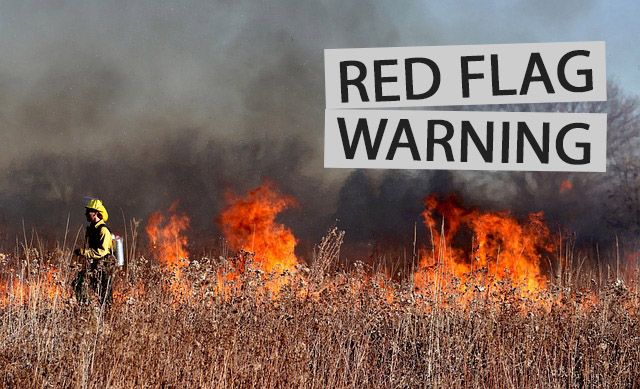
WILDFIRE SAFETY DURING RED FLAG WARNINGS
- Avoid activies with open flames or sparks
- Avoid power equipment that creates sparks
- Obey burn bans
- Properly discard cigarettes
- Keep vehicles off of dry grasses
- Call 911 to report smoke or file
THE FIRST THING THAT YOU WANT TO DO IS NOT START A WILDFIRE!
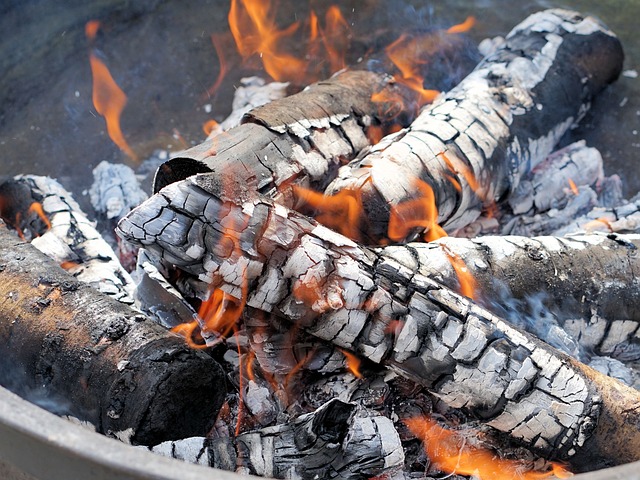
- Improper ash disposal has become a common cause of many forest fires. Wood ashes retain enough heat to ignite other combustible materials for several days.
- Sitting around a campfire is a fun activity.
- Create a fire ring and clear an area around it.
- Have a water source big enough to extinguish it if it gets too large, too quickly.
- If you expect a large fire or a smoky fire, get a free burn permit. That lets 911 dispatch know there is a permitted fire in the area if someone calls in a smoke investigation.
WILDFIRE – OUR NUMBER ONE THREAT- What can you do?
Preparedness
Wildfire preparedness is referring to preparing your property and your home to withstand
a wildfire, and preparing yourself to be ready to evacuate if necesary. There are many
factors that determine how a fire will act, what direction it might come from, the fire’s
intensity, and it’s duration on your property. Anything that can burn is fuel. Your home is also fuel.
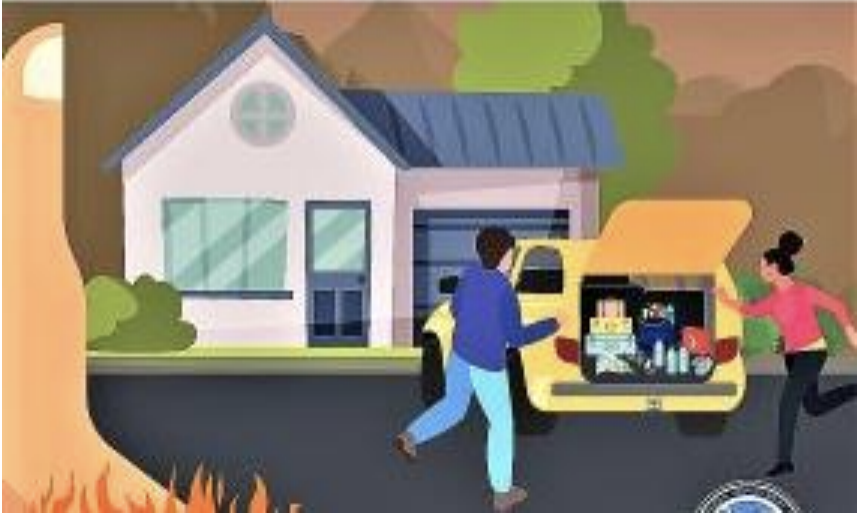
It’s also about being prepared to evacuate well ahead of time. If you get a notification to evacuate, you will be in a hurry, and you won’t be thinking clearly. Hopefully it will never happen, but you must be ready for it if it does.
Mitigation
What is mitigation? What you are doing is mitigating the effects of a wildfire on your property and your home. Your goal is to prepare your home and property to withstand a wildfire passing through your neighborhood.
Home Ignition Zone 0 = 0 to 5 ft
The home ignition zone is referring to the immediate area around your home. Your goal is to remove anything that can catch embers, and lead to that catching your home on fire.
- Are your gutters filled with pine needles?
- Are there shrubs right next to your home?
- Do you have wood chips as mulch right next to your home?
- If you use a wood stove, do you have a stack of firewood right up against your home?
- If you have a deck, is there wind-blown or man-made material collected underneath it?
- All of these things can collect flying embers during a fire. The fire may pass your home, but these embers get fanned by the wind and lead to your house burning down well after the main fire has passed.
Zone 1 is 5’ to 30’ out from your home.
This is the area that you want to remove any fuels that could sustain a fire. Dead branches, trees that are too close together, or overhang your roof.
Zone 2 is from 30’ to 100’
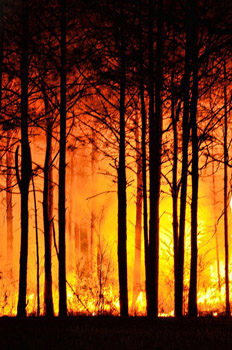
- Your goal here is to keep this area free from material that can cause a fire to linger and spread flames or embers. A fire that races along the grass but does not burn up into the trees is desirable. You don’t want “ladder” fuels that let the fire walk its way into the tree tops. Once a fire gets up there it will travel quickly, and can consume large forests very quickly.
- Try to keep the ground clear, trim branches up to 5 or 6 feet, and avoid brush piles. Separate your firewood from surrounding fuels as best you can.
Get a tax break on your Colorado Tax Return
Colorado allows an income tax subtraction for wildfire mitigation measures performed on property located in Colorado. For tax years 2023 through 2025, an income tax credit is also allowed for performing wildlife mitigation measures. Both the subtraction and the credit are allowed to qualifying taxpayers who incur actual out-of-pocket expenses for wildfire mitigation measures on their property

Hardening Your Home
- Hardening your home refers to making your home resistant to fire.
- Metal roof vs shingles or shake roofs
- What kind of siding do you have?
- Are your eave troughs open and collecting pine needles, or are they covered?
- Wire mesh covering vents or openings to prevent embers from getting in.
- Check out the many references on ways to harden your home.
Fuel Management
- There are several factors that determine how a fire burns.
- Grasses are quick burning and as a fire passes these “5 minute” fuels they burn completely and don’t create enough heat energy to light larger, slower burning fuels to ignite.
- One hour fuels are branches, young trees, shrubs, landscape timbers and other heavier fuels that take a while to catch on fire and usually burn slowly. They can light other fuels on fire.
- A large tree, like a Ponderosa Pine is a very slow burning fuel that can only burn thoroughly if it is exposed to high heat and fire for some time. The needles and branches can burn quickly but the trunk generally survives, unless the fire is so hot that it burns the trunk and roots to the point the tree dies.
Community
If your property is mitigated and your home hardened, your home can still burn if the property right next to you is not mitigated. Most local property owner associations work together with their community to create large mitigated areas so that each owner is part of the solution in protecting their neighborhoods. This can greatly enhance the chances of your home surviving a wildfire.
Creating a community action plan brings the entire neighborhood into a coordinated defense against wildfires.
Evacuation
Evacuation
Why do we evacuate?
- Wildfires can grow large very quickly. They have some predictability, but can be affected by terrain features, natural and man-made fire breaks, etc. However, the largest factor is the wind. High wind can cause wildfires to travel very quickly and cover large areas in a short time.
- We’ve been fighting wildfires for a long time now. We can fairly accurately anticipate where a fire is heading and how quickly.
- Escape routes can potentially be compromised and people need time to gather things and head out. Learn the available routes ahead of time.
- Evacuations are not declared lightly. Human safety is the highest concern and if a fire is heading toward a community we want to get people out of the way as early as possible.
- Sometimes you may get several hours’ notice, but other times you may be told to evacuate immediately because the fire has shifted directions or other factors threaten
your ability to move out of the way.
When do we evacuate?
State and local agencies work together to decide when to evacuate. Register for reverse 911 so that you can be notified quickly. There may be cases where sheriff deputies or
fire personnel will go through your neighborhood telling people it’s time to leave.
Being prepared to evacuate
While we all hope your home is never threatened by a wildfire, a part of living here is to be prepared for that eventuality. So what do you do to be prepared, aside from mitigation and hardening your home?
What are the things that are irreplaceable, besides lives?
- Family Photos
- Important papers
- Medicines
- Cherished items like Christmas Ornaments
Put these things in see-through totes that are easy to transport. Mark them with a flag that says “Fire”, so they are easily seen and are quickly gathered. Store them together.
When a fire comes and you’re packing to leave, you’re going to be stressed out, and may not be thinking as clearly as normal. Make throwing boxes into your vehicle an obvious task that you don’t have to think about.
Additional Items to Consider Adding to an Emergency Supply Kit:
- Prescription medications and glasses
- Infant formula and diapers
- Pet food, water and supplies for your pet
- Important family documents such as copies of insurance policies, identification and bank account records in a portable, waterproof container
- Cash and change
- Emergency reference material such as a first aid book or information from www.ready.gov
- Sleeping bag or warm blanket for each person. Consider additional bedding if you live in a cold-weather climate.
- Complete change of clothing including a long sleeved shirt, long pants and sturdy
shoes. Consider additional clothing if you live in a cold-weather climate. - Fire extinguisher
- Matches in a waterproof container
- Feminine supplies, personal hygiene items and hand sanitizer
- Mess kits, paper cups, plates and disposable utensils, paper towels, paper and pencil books, games, puzzles or other activities for children
Learn and know your evacuation/escape routes
- Most evacuation routes are pretty obvious. It’s probably the route you take to town. You can also look on a map and see possible routes.
- It’s important to have multiple routes because the routes available in a wildfire situation will depend on which way the fire is moving.
- It’s wise to drive each of the routes available to you, to at least know what that drive is like. In an emergency, you may be driving in the dark or with smoke making it difficult to see.
- If your neighborhood has a POA, check with them for the available escape routes for your neighborhood. Your neighbors might also be able to show you your escape routes. If you are unable to determine your routes, please contact the Florissant Fire Dept. and someone can help you, or get you to the person who can. You can also email: Chief@florissantfire.com.
WILDLIFE
Bears
- Do not feed the bears, either accidentally or on purpose.
- Once a bear gets a meal, it will return at some point for another meal.
- Bears can detect even a small amount of food in a car and are capable of opening doors, or breaking windows to get inside. So don’t leave any food in a car overnight, and lock your doors.
Don’t put out your trash for pick up out the night before. Bears or raccoons will get into the trash can and spread it all over your driveway.
Mountain Lions
- Observing a Mountain Lion is a rare event.
- Young Mountain Lions have been known to follow humans. Mostly out of curiosity.
- Attacks on humans are extremely rare. If you come upon a Mountain Lion, slowly back away and do not turn your back to them Do not run. That will trigger a chase response.
- Mountain Lions have been known to attack and kill pets. However their preferred food is deer.
Download an excellent brochure on Living with Lions.
Deer
- Deer have acclimatized to living with and around humans.
- If they find food once, they will continually return in hopes of finding it again.
- While they are used to being around humans, they are not tame. They are quite capable of injuring humans, and will not hesitate to attack your dog. They have seriously injured dogs and killed them, particularly if they have fawns.
- Deer love all the tasty plants we try to raise. You will need welded wire fencing to keep them away. They can jump a 5 foot fence with ease. An 8 foot fence is about their limit.
- You do not need to feed deer to get them near your home. They will visit often, generally in the night, but often in broad daylight.
Altitude Sickness
Living in the high country of Colorado means thin air. It can cause Altitude Sickness in some people. Nausea, headache, and just an ill feeling. It’s highly recommended to drink water. A lot of water. Carry a water bottle around with you and sip out of it regularly. It helps. You may have difficulty breathing. It just takes time to acclimatize to the altitude.
Living up here is an awesome experience. You get the beautiful scenery, you’ll see a lot of wildlife, and some of that up close. It’s normal to hear people shoot guns at targets on occasion. Other than that, it’s generally pretty quiet unless you live in a more densely populated neighborhood. A lot of people come here for the nature. You can sit on your porch and see wildlife pass by, or through your property.
Many people up here will wave as they drive by. You can get to know your neighbors – if you want to. We tend to rely on each other, help each other. Or you can find total anonymity if that’s what you’re seeking. Either way, we hope you love living up here like the rest of us do.
Additional Reading Resources
WILDFIRE PREPARDNESS
WILDFIRE EVACUATIONS
WILDFIRE MITIGATION
- Wildfire Mitigation Measures Subtraction – How to turn mitigation into a tax deduction
- Wildfire In Different Forest Types
LIVING WITH WILDLIFE
Mountain Lions
Black Bears
- Human-Bear Conflicts
- Living With Bears – How to avoid conflicts
- Bear proofing your home
- Black Bears in Colorado